
Introduction

Change is the only constant in today’s fast-evolving business landscape. Whether organizations are restructuring, adopting new technologies, or shifting market strategies, managing change effectively is crucial for long-term success. However, despite the best-laid plans, many change initiatives fail—not due to poor strategy but because of resistance from the people affected. So, how can leaders ensure that transformation is not only implemented but embraced?
This article explores the human side of change management, outlining practical strategies to overcome resistance, foster engagement, and ensure seamless transitions. By understanding the psychology of change, equipping teams with the right tools, and fostering a culture of adaptability, organizations can turn challenges into opportunities for growth.
Change is not just about implementing new processes; it is about shifting mindsets and behaviors. Successful transformation requires leaders to become architects of change, creating an environment where employees feel supported, valued, and empowered. This guide will explore key principles of change management, examine common barriers to success, and provide actionable strategies to help organizations navigate transformation with confidence.
Understanding Resistance to Change
Resistance is a natural human response to uncertainty. Employees often fear losing control, disruption of their routine, or inadequacy in adapting to new systems. Understanding why resistance occurs is the first step in mitigating its impact. Some employees struggle with a lack of awareness—they may not fully understand the reasons behind the transformation, leading to apathy or outright opposition. Others experience fear of the unknown, an anxiety stemming from the uncertainty that change brings. There is also the loss of comfort and control, as employees find their established workflows disrupted.
Beyond personal fears, organizational history plays a role. If past changes were poorly handled or abandoned midway, skepticism toward leadership can deepen. Employees may also be concerned about increased workload or the complexity of new systems, further fueling disengagement.
Leaders must address these concerns proactively. Successful change management requires not just strategic execution but also an empathetic approach that reassures employees and builds trust.
Change Management Models
To navigate change effectively, organizations can adopt established change management models that provide structured approaches to transformation. Some of the most widely used frameworks include:
1. Kotter’s 8-Step Change Model

Developed by John Kotter, this model provides a step-by-step approach to leading change:
- Create a Sense of Urgency: Communicate why change is necessary.
- Build a Guiding Coalition: Assemble a team of influential leaders to champion the change.
- Develop a Vision and Strategy: Define a clear direction for transformation.
- Communicate the Change Vision: Share the vision consistently across the organization.
- Empower Employees for Broad-Based Action: Remove obstacles and enable participation.
- Generate Short-Term Wins: Show early successes to build momentum.
- Consolidate Gains and Produce More Change: Reinforce progress with sustained effort.
- Anchor New Approaches in Culture: Ensure changes become ingrained in company values.
2. Lewin’s Change Management Model
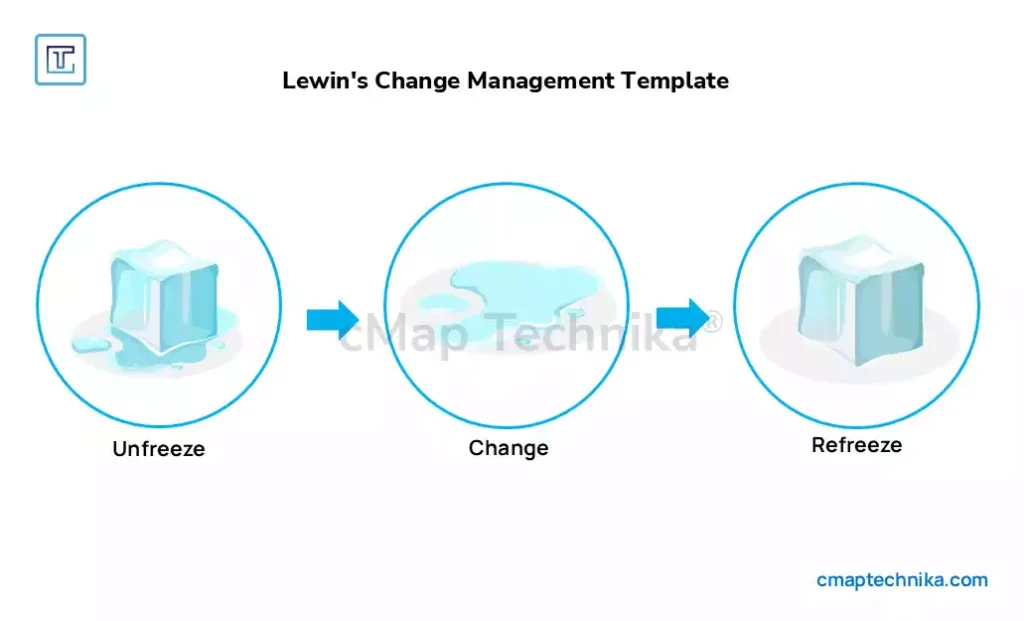
Kurt Lewin’s model simplifies change into three stages:
- Unfreeze: Prepare the organization by identifying the need for change and challenging existing behaviors.
- Change: Implement the transformation while supporting employees through the transition.
- Refreeze: Solidify new behaviors, ensuring they become the norm.
3. The ADKAR Model
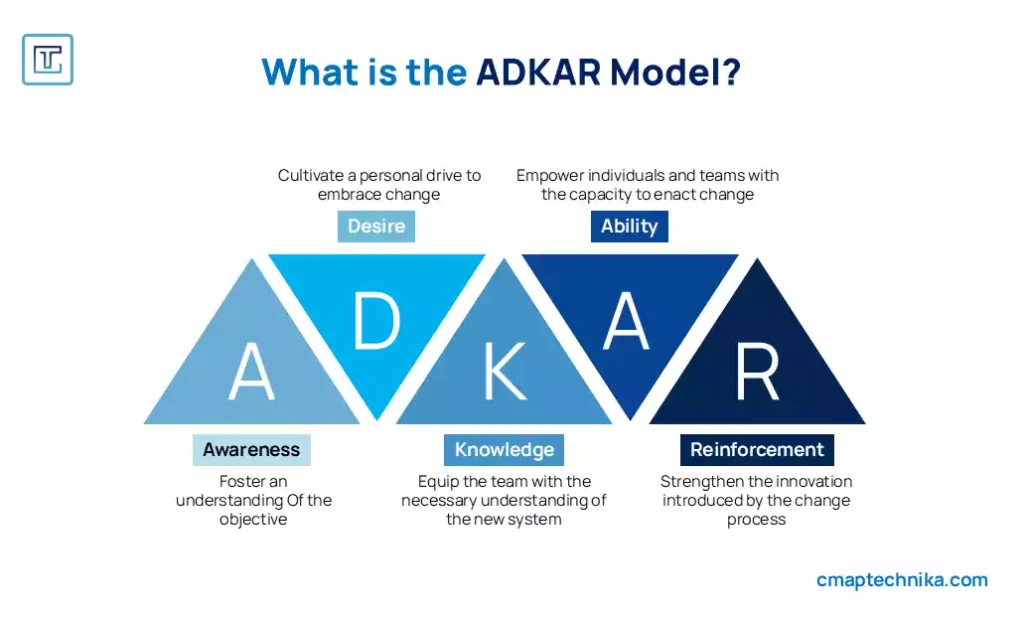
The ADKAR model, developed by Prosci, focuses on individual change and consists of five stages:
- Awareness: Understanding the need for change.
- Desire: Developing a personal motivation to support the change.
- Knowledge: Learning how to adapt to new processes.
- Ability: Gaining the skills to implement change.
- Reinforcement: Ensuring long-term adoption through continuous support.
4. Kübler-Ross Change Curve
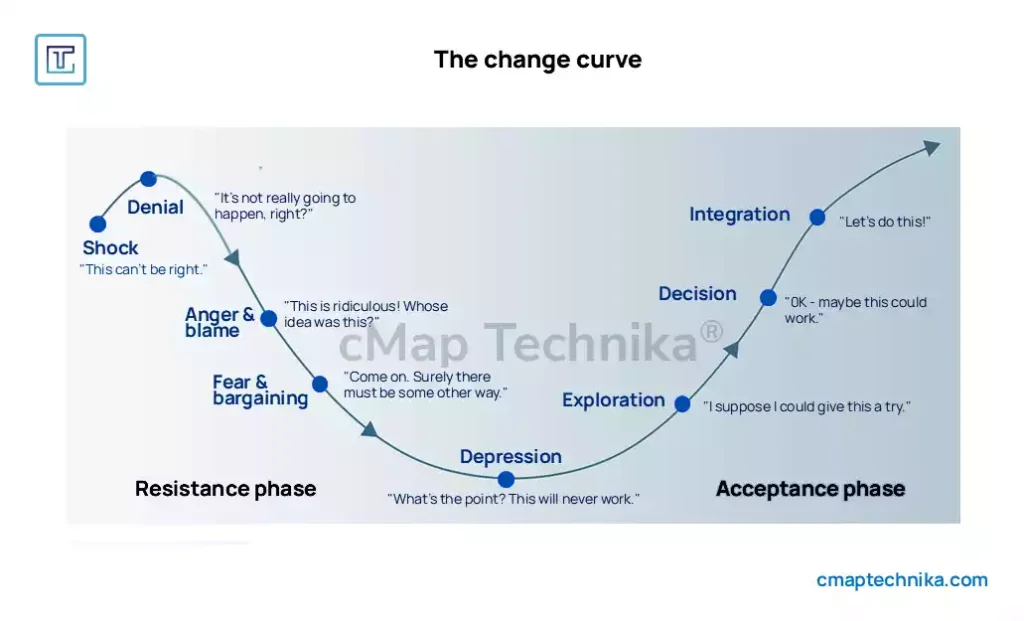
Originally developed to explain the stages of grief, the Kübler-Ross model applies to organizational change by outlining the emotional journey employees undergo. Unlike process-driven models, this framework focuses on psychological responses, helping leaders anticipate resistance and provide appropriate support.
- Denial: Employees resist or ignore change, often questioning its necessity.
- Anger: Frustration and resentment arise, leading to pushback against new initiatives.
- Bargaining: Individuals attempt to negotiate or delay change, hoping to retain aspects of the old system.
- Depression: A sense of discouragement and disengagement may emerge, reducing productivity.
- Acceptance: Employees begin to acknowledge the change and explore its benefits.
- Commitment: They fully integrate new behaviors and move forward.
Unlike other models that emphasize structured steps, the Kübler-Ross curve highlights emotional fluctuation. Leaders who recognize these reactions can provide targeted support, fostering a smoother transition.
5. Bridges’ Transition Model

William Bridges’ model focuses on the psychological transition rather than the external change itself. It provides insight into how individuals emotionally process transformation, helping leaders manage change on a deeper level.
- Ending, Losing, and Letting Go: Employees experience a sense of loss as they detach from familiar routines and structures. Leaders must acknowledge these emotions and communicate openly to ease the transition.
- The Neutral Zone: A period of uncertainty where employees are neither fully committed to the old way nor fully integrated into the new. This phase often comes with confusion and lower morale, requiring strong guidance and reassurance.
- New Beginning: Individuals accept and embrace the change, developing confidence in the new system. This phase is marked by increased engagement and a renewed sense of purpose.
Unlike models that focus purely on implementation, Bridges’ approach emphasizes emotional adaptation. Leaders who acknowledge these phases can provide better support, ensuring employees feel valued throughout the transition.
Strategies to Foster Engagement
Communicate with Clarity and Purpose
One of the most common pitfalls in change management is poor communication. Employees who do not understand the rationale behind a transformation are unlikely to support it. Leaders must craft a well-structured communication plan that explains not only what is changing but why it matters.
Clarity is key. Messages should be free of jargon and delivered consistently across the organization. Regular updates prevent misinformation from taking root, while two-way conversations allow employees to express their concerns and receive direct responses. Organizations should use multiple communication channels, including in-person meetings, video messages, and digital platforms, ensuring that employees receive information in the way that best suits them.
Storytelling can be a powerful tool in reinforcing messages. Rather than presenting change as an abstract corporate decision, leaders can illustrate its impact through real-world examples, helping employees connect the transformation to a broader vision.
The Role of Leadership in Change Management
Leaders are at the heart of every successful transformation. Beyond setting the strategy, they must inspire confidence and commitment throughout the organization.
Empathy is a cornerstone of effective leadership. Recognizing the human impact of change and addressing employee concerns with genuine understanding builds trust. Transparency is equally crucial—leaders who openly discuss both successes and setbacks establish credibility.
Leading by example reinforces adaptability. Employees take cues from leadership, and when senior executives actively engage with new processes, it encourages widespread adoption. Cultivating a change-ready culture requires fostering an environment where continuous improvement is valued.
Conclusion
Change management is not just about processes and policies—it’s about people. By integrating structured change management models, fostering engagement, and leading with empathy, organizations can transform resistance into commitment. When approached thoughtfully, change is not something to be feared—it is something to be embraced, paving the way for sustainable success in an ever-changing world.

Author: Jennifer Wilson
Hey! This is Jennifer